The Future of New Development, Marketing & Sales Isn't Visual - It's The Emotional ROI Method™
There was a time when exposure equaled sales. When the playbook for luxury marketing was about visibility, not intimacy.
But today’s buyer — especially at the high end — isn’t buying exposure. They’re buying identity.
They’re asking a quieter question than “What’s the price per square foot?” They’re asking, “Does this place feel like me?”
The Shift
In this new market, attention is no longer enough. The most valuable currency in development isn’t reach — it’s resonance.
A building can be perfectly designed, expertly priced, and brilliantly marketed — but if it doesn’t make people feel, it will never sell at its full potential.
That emotional connection — between architecture, story, and self — is what I call Emotional ROI™.
It’s the return that comes when a buyer recognizes themselves in what you’ve built.
The Outcome
When emotional alignment is present, everything else moves faster.
Buyers stop comparing. They start committing.
Price resistance dissolves. Sales velocity increases. Brand equity strengthens long after sell-out.
Because in luxury, perceived value is real value. And perception begins in emotion, not exposure.
The 10x Reframe
Developers who understand Emotional ROI™ protect both velocity and value.
It’s not about adding more marketing layers — it’s about eliminating dissonance.
The alignment between design, story, and audience isn’t a cost; it’s a multiplier.
I’ve developed a proprietary framework that helps developers apply Emotional ROI™ strategically — safeguarding price integrity and absorption through emotional precision.
That’s how you 10x the return on your investment: through resonance, not reach.
The Invisible Advantage
When architecture, narrative, and audience identity are aligned, the building becomes more than product — it becomes persona.
Buyers don’t just want it; they see themselves in it. And that’s the moment the sale is no longer transactional — it’s inevitable.
The developer who creates that feeling doesn’t compete on exposure or incentives.
They lead through clarity, desire, and brand equity that compounds.
The Future of Luxury
The future of luxury isn’t louder. It’s more attuned.
The projects that move fastest — and last longest — are the ones that make people feel something before they even see the view.
That’s The Emotional ROI Method™. And it’s time developers start calculating it.
Christina DiStefano is a luxury real estate advisor and creator of The Emotional ROI Method™, helping developers turn architecture into identity and identity into return.
The Emotional ROI Method™ in Luxury Real Estate: The New Currency of 2026
Luxury real estate isn’t being reshaped by interest rates, inventory, or incentives. It’s being reshaped by emotion — the most powerful force driving UHNW decision-making in 2026.
Today’s buyers aren’t evaluating homes solely through square footage, comps, or amenities. They’re evaluating them through identity.
The real question every buyer is asking is:
“Does this home reflect who I am becoming?”
This shift has transformed Emotional ROI™ from a conceptual idea into the single most important strategy for developers, architects, and luxury advisors who want to sell with precision.
In this issue, we explore what Emotional ROI™ really means, why it matters now more than ever, and how it is silently determining the performance of every luxury project.
The Emotional Shift No One Predicted
For years, luxury sales teams focused on features. Views. Amenities. Finishes. Architecture.
But the most observant players — the developers who watched buyer behavior closely — started noticing something else:
The homes that sold fastest had emotional identity clarity. The homes that struggled did not.
Today’s buyers are guided by questions such as:
Does this environment support the life I want next?
Do I feel emotionally grounded here?
Does this space elevate my identity?
Does this building feel aligned with me?
Emotion is not replacing logic. Emotion is leading logic.
And the buildings with high Emotional ROI™ are the ones that consistently outperform.
What Emotional ROI™ Actually Is — and Isn’t
Emotional ROI™ is the return a buyer receives in:
Identity resonance
Emotional clarity
Psychological comfort
Meaning and purpose
Architectural harmony
Nervous system regulation
Next-chapter alignment
It is NOT:
Staging
Vibes
Flowery marketing language
Aesthetic preference
It is the architecture behind desire, and the reason why some buildings feel instantly magnetic while others sit unanswered.
Invisible Architecture™ — The Missing Layer
Before a buyer analyzes the floor plan… Before they consider pricing… Before they imagine a piece of furniture…
They feel something.
This is Invisible Architecture™ — the emotional, sensory, and psychological blueprint that shapes a buyer’s first impression.
Invisible Architecture™ explains why:
A spectacularly designed building can feel emotionally sterile
A smaller space can feel remarkably calm
A buyer knows “yes” or “no” within seconds
Understanding this emotional blueprint is now a non-negotiable advantage for developers.
**Building Archetypes & Buyer Archetypes —
Alignment Creates Velocity**
Every building has an emotional identity. Every buyer has an aspirational identity.
Sales accelerate when the two align. They stall when they do not.
Building archetypes clarify the emotional identity of a project. Buyer archetypes clarify who the home is truly for.
When these identities meet — beautifully and precisely — the sale feels inevitable.
The Emotional ROI™ Method
(High-level overview; proprietary elements withheld.)
The Emotional ROI™ Method is a structured approach I’ve developed over 13 years of luxury new development experience.
It integrates:
Architecture and identity
Buyer psychology
Emotional alignment
Narrative cohesion
Invisible Architecture™
Archetype strategy
Next-chapter lifestyle mapping
The method includes three conceptual models:
The Emotional ROI Pyramid™
The Soul of Space Circle™
The Becoming Pathway™
These models guide the emotional analysis of a home — but the proprietary mechanics remain confidential.
Why This Matters for Developers in 2026
Developers who integrate Emotional ROI™ see:
Faster sales velocity
Higher buyer certainty
Stronger pricing integrity
Reduced incentive reliance
Clearer buyer alignment
Distinct brand positioning
Greater demand for identity-driven listings
Luxury real estate is no longer won by the tallest tower or the largest amenity package — but by the buildings that make buyers feel understood.
For Developers Building the Future of Luxury
If you're designing, branding, or repositioning a development in 2026, Emotional ROI™ is the new strategic advantage.
Your building already has a soul. My work is to help you articulate it.
The Emotional ROI Method™ | The Secret That Drives Velocity, Attachment, and Conviction at the Highest End of the Market
Developers, let me tell you something you may not be expecting to hear.
You are not selling square footage—no matter how often the industry pretends that you are.
You are selling identity.
This is not a philosophical distinction. It is the difference between momentum and stagnation. The issue is not that developers think they are selling square footage. Of course they do. That is how projects are underwritten, priced, approved, and marketed. Square footage is how the industry organizes value.
But buyers do not experience value the way the industry measures it.
What matters is not what you believe you are selling. What matters is what your buyer is actually buying. And buyers are not buying square footage. They are buying identity alignment.
They are buying the version of themselves they believe will exist inside the space—the way they will live, feel, move, host, rest, and be perceived. They are buying safety, authority, privacy, arrival, reinvention, or legacy. Often all at once.
Once you understand this, the behavior of the market starts to make sense.
When a development stalls, it is rarely because the market is slow. It is because the identity being offered is unclear, diluted, or misaligned. And no amount of pricing strategy, incentive structuring, or marketing volume can correct that.
We are living in an era where it has become very convenient to blame the market. Interest rates. Global uncertainty. Election cycles. Buyer hesitation. Media narratives. These phrases circulate easily through boardrooms and sales meetings. They are offered to investors as explanations. They are whispered behind closed doors when velocity slows, absorption disappoints, or a project carries the quiet tension that something simply isn’t working. But the truth is far more precise—and far more uncomfortable to admit.
Most underperforming luxury developments do not have a market problem. They have a meaning problem. And meaning does not respond to strategy alone. It responds to identity.
The market is not a force acting against your building. It is a mirror, reflecting back the emotional clarity—or lack of clarity—behind it. When a building’s identity is clear, coherent, and deeply understood by the people bringing it into the world, buyers feel it immediately. They may not be able to articulate why, but their nervous system registers safety, alignment, and truth.
In those moments, the market becomes almost irrelevant.
People stretch beyond their original plans. They prioritize differently. They move faster than logic would suggest. They cross cities, countries, even continents to belong in a space that recognizes them.
When that identity is unclear, the opposite occurs.
Buyers hesitate without understanding why. They second-guess. They compare endlessly. They negotiate, delay, disappear. And the story becomes familiar: the market is slow. In reality, the market is responding exactly as it should—to emotional misalignment.
People do not buy apartments. They buy selves.
They buy the version of themselves they imagine will exist inside the space—the woman who wakes up to that light, the man who pours coffee in that kitchen, the family that gathers in that living room. They buy power, quiet, reinvention, safety, legacy.
This is not poetic framing. It is psychology.
Messaging that speaks only to finishes and specifications appeals to logic. Logic can evaluate a listing, but it rarely signs a contract. Identity does. And identity is constructed through meaning.
Many developers believe they have a marketing problem. They don’t. They have a templated luxury problem.
The industry has trained itself to repeat the same language for decades—unparalleled, exceptional, breathtaking, exclusive, an elevated lifestyle.
For buyers who already live extraordinary lives, this language has lost its signal.
They are not moved by scale. They are moved by truth. By specificity. By recognition. By resonance. Which requires something most campaigns never fully define: a clearly articulated identity for the building. Not an aesthetic. Not a mood. An identity.
When meaning is absent, price becomes the battleground. Buyers fixate on price per square foot, comparative inventory, leverage, incentives, timing. This is not about money. It is about emotional certainty.
Certainty creates attachment. Uncertainty creates protection.
Protection negotiates. Protection hesitates. Protection waits.
Buildings carry emotional states. Some feel grounded. Some feel guarded. Some feel confident. Some feel unresolved. Some feel unseen. These emotional states are shaped by intention, language, tone, energy, and the stories told—or avoided. Sophisticated buyers feel this instantly, often before they ever step inside.
This is why two buildings on the same block can perform entirely differently.
It is not logical. It is emotional.
For decades, financial ROI has been the dominant metric of success. But Emotional ROI™ has quietly become the driver of value. It is the return a buyer experiences in their nervous system, identity, and sense of arrival. When Emotional ROI™ is strong, decisions accelerate, negotiations soften, attachment deepens, and momentum sustains. When it is weak, even the most expensive properties feel cold, generic, or forgettable.
The most important question is not how do we sell this. It is who is this meant to serve.
A building should not try to attract everyone who can afford it. It should magnetize the person who belongs inside it. Until that meaning is fully claimed, the market will continue to feel slow. And the building will continue to wait.
It’s not the market.
It’s the meaning.
And once the meaning is clear, the right buyer doesn’t need to be convinced. They recognize themselves immediately—because they finally feel seen.
EXPLORE MORE EMOTIONAL ROI™ ARTICLES ON MY LINKEDIN HERE.
The Emotional ROI Method™: Why Emotional Intelligence Is the New Power in Luxury Real Estate
Today, the qualities that consistently outperform in the luxury sector are the very ones historically labeled as feminine: empathy, intuition, relational intelligence, emotional attunement, presence, nuance, deep listening, and energetic awareness. These traits are not exclusive to women, nor are they inaccessible to men—and they are the foundation of Emotional ROI®.
Luxury real estate has long been shaped by a masculine paradigm: speed, dominance, competition, force, volume, and “winning the deal” at all costs. It’s the legacy of an industry built on hustle, hard-nosed negotiation, and a belief that power comes from pushing harder than the next person.
But the market has shifted. The buyers have shifted. The emotional landscape of high-end transactions has shifted. And the definition of power is being rewritten in real time.
Today, the qualities that consistently outperform in the luxury sector are the very ones historically labeled as feminine: empathy, intuition, relational intelligence, emotional attunement, presence, nuance, deep listening, and energetic awareness.
These traits are not exclusive to women, nor are they inaccessible to men.
They are human qualities — but they have been undervalued, misunderstood, or dismissed in a masculine-coded industry.
That era is ending.
The new leaders in luxury real estate are the ones who can perceive what others miss: the emotional architecture of a buyer’s decision, the subtle signals of trust, the feeling beneath the features, the unspoken truth behind “We’re still thinking about it.”
In a high-stakes, identity-driven market, emotional intelligence isn’t soft. It’s strategy.
The Shift: From Force to Presence
For decades, the industry rewarded the loudest person in the room. Today, luxury consumers reward the most attuned person in the room.
The global elite don’t want to be pressured. They want to be understood.
They don’t respond to force. They respond to resonance.
They don’t need more information. They need clarity, safety, and alignment.
Presence has become the new persuasion. Attunement is now more valuable than aggression. And intuition is not a mystical skill — it’s a strategic one.
The agents and advisors who thrive in this environment are the ones who understand that luxury sales are emotional, psychological, and identity-driven long before they are financial.
Emotional ROI™ and the Feminine Lens of Leadership
In my own Emotional ROI™ methodology, I teach that luxury real estate is an emotional language before it is a financial transaction.
Every buyer — regardless of gender, wealth, or background — is ultimately searching for a feeling, a story, a next chapter, a sense of self, or a new identity.
Luxury homes are mirrors. People select the home that reflects the version of themselves they are stepping into.
And the agents who can guide someone through that process are the ones who lead with emotional intelligence.
What we’ve historically called “feminine traits” — empathy, receptivity, intuitive negotiation, relational attunement — are actually the core competencies of selling luxury in today’s landscape.
Why This Matters for Developers
Developers want absorption. They want velocity. They want stability in unpredictable markets. They want brokers who can translate architecture into emotion and elevate perceived value.
Here’s the truth: A building can only resonate if the person selling it can, too.
Emotional intelligence is the bridge between architecture and identity, lifestyle and aspiration, narrative and price point, buyer and belonging.
Why Emotional Intelligence Matters Even More in the Age of AI
As AI becomes increasingly capable of analyzing data, forecasting markets, and automating operational tasks, the irreplaceable value in luxury real estate is shifting toward something entirely different: the human ability to understand emotion.
AI can process information. AI cannot process identity. AI can predict behavior. AI cannot read the soul of a buyer’s next chapter. AI can streamline operations. AI cannot build trust, attune to tone, or feel the moment a buyer softens into a yes.
As technology accelerates, the professionals who thrive will be those who marry intelligence with intuition — the advisors who can do what no algorithm can: translate emotion into clarity, narrative, and conviction.
EXPLORE MORE EMOTIONAL ROI™ ARTICLES AND MY NEWSLETTER ON LINKEDIN HERE.
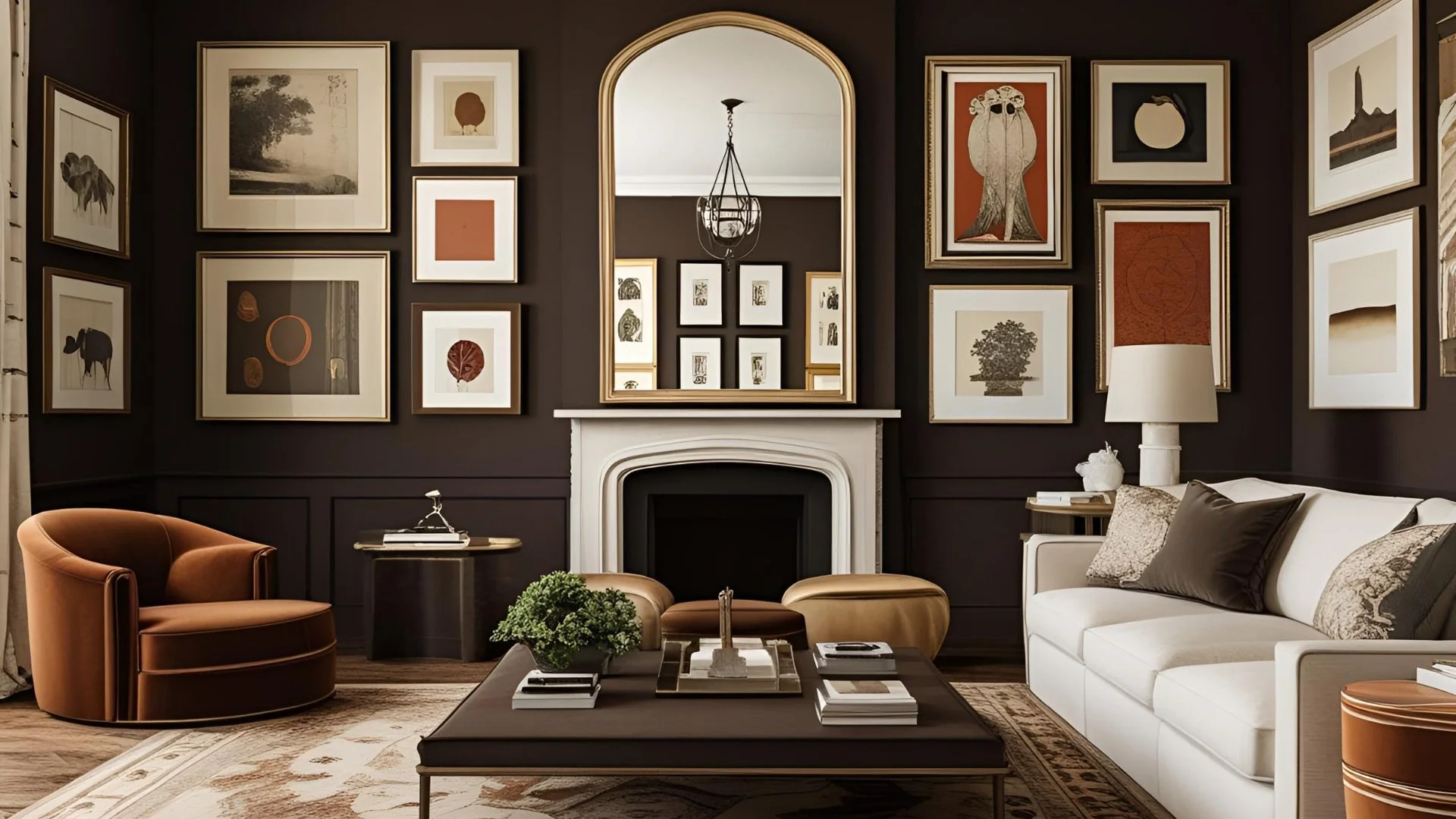
Your Home Is Talking To You—Are You Listening?
When I walked into my home a few weeks ago, something felt... off.
The furniture was in the right place. The lighting was soft. The palette? Neutral, just like I like it. But underneath the surface, the energy of the space felt disconnected from the woman I was becoming. It didn’t feel like home to her—to the version of me that had grown through challenge, stepped deeper into purpose, and was ready to be fully seen.
That moment sparked a powerful shift, one I want to share with you.
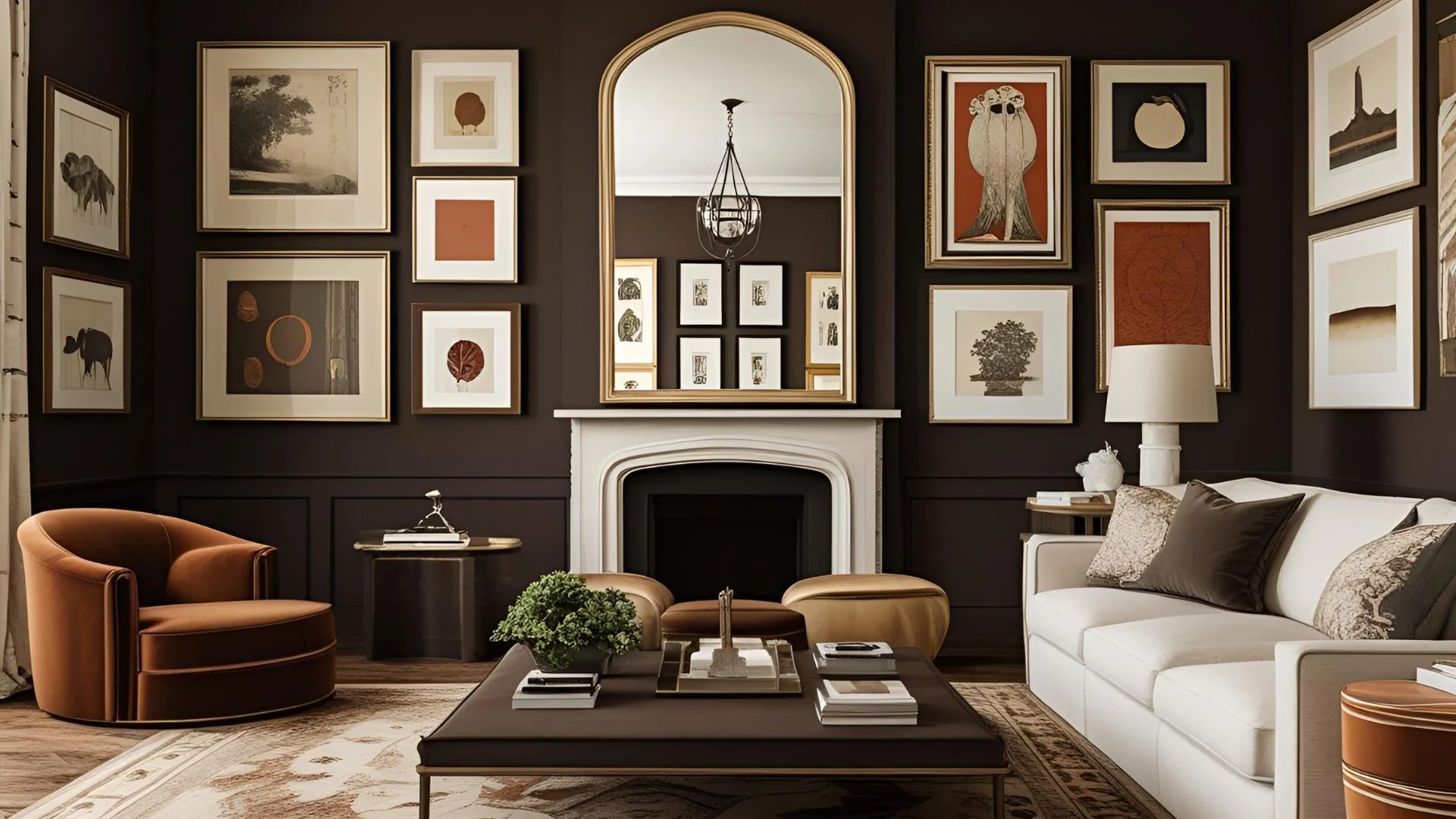
Image Courtesy of Aureum & Co. 2025
When I walked into my home a few weeks ago, something felt... off.
The furniture was in the right place. The lighting was soft. The palette? Neutral, just like I like it. But underneath the surface, the energy of the space felt disconnected from the woman I was becoming. It didn’t feel like home to her—to the version of me that had grown through challenge, stepped deeper into purpose, and was ready to be fully seen.
That moment sparked a powerful shift, one I want to share with you.
Your Environment Is a Mirror
We often think of our homes as static backdrops. But the truth is, your space is always reflecting back the internal state of your life. Every object, every pile of clutter, every untouched corner holds a message. It’s not just about cleaning up; it’s about coming into alignment.
When our environment matches our frequency, we feel it immediately. There’s a resonance, a flow, a sense of clarity that supports the version of ourselves we’re trying to step into.
What Does Your Home Say About You?
Our homes carry the imprint of what we tolerate, what we celebrate, and what we’ve forgotten. If something feels stuck in your life—your creativity, your confidence, your clarity—take a moment to look around.
Is your space supporting the next version of you? Or is it keeping you anchored to a past identity?
Beauty Is Not a Luxury—It’s a Frequency
This isn’t about perfection or Pinterest-worthy rooms. It’s about creating a space that nourishes your nervous system, tells the truth about who you are now, and helps you become who you’re meant to be next.
Start small: light a candle, change the placement of your favorite chair, clear out one drawer. Use scent, texture, color, and light to design with intention.
For me, it started with the bold choice of adding a red linen vest to a wardrobe filled with neutrals—a symbol of stepping into greater visibility, power, and creative authority.
You Are Allowed to Change
Moving into a new home last year, I brought everything with me—furniture, linens, memories—and also, a version of myself that was already outgrowing the past. Over time, the cluttered closet, the drop zones, the half-finished corners began to whisper to me.
"It’s time."
So I began listening.
Not just to the stuff, but to the deeper story: of where I’d been, who I was becoming, and what kind of life I wanted to live in these rooms.
The Home as Portal
Your home is not just a container. It’s a portal.
It’s the setting for your next act, your next business move, your next reinvention. And if you feel stuck, misaligned, or unsure where to start—begin by listening to what your space is trying to tell you.
This work isn’t theoretical for me. It’s deeply personal. And it’s the heartbeat of everything I’m building through my new brand, Aureum.
Let’s redefine home together.
— Christina DiStefano

What is The Emotional ROI™? Why It Matters in Real Estate

By Christina DiStefano | Creator of Emotional ROI & Luxury Real Estate Advisor
When people talk about ROI in real estate, they’re usually referring to Return on Investment—how much profit a property will yield over time. But there’s another kind of ROI, one that’s harder to measure but deeply felt: Emotional ROI.
This is the return that comes from how a space makes you feel—calm, inspired, supported, safe. And in today’s luxury market, where buyers are craving meaning, beauty, and alignment, Emotional ROI is the new must-have metric.
What Is Emotional ROI?
Emotional ROI is my signature approach to real estate and design. It’s about helping clients invest in homes that resonate on a soul level—not just a spreadsheet.
It blends intuitive design principles, energy awareness, and buyer psychology to create homes that do more than photograph beautifully—they feel like home the moment you step inside.
The Core of Emotional ROI
As a Reiki Master, certified coach, and interior styling expert, I draw from multiple disciplines to support this process:
Energy work: To understand how layout, light, and material affect nervous system regulation
Mindset coaching: To help clients align their external home with their internal goals
Luxury staging & design: To create visual harmony that evokes emotion and connection
This approach is especially impactful for clients navigating big transitions—buying their first home, moving cities, downsizing after a life change, or investing in a space that reflects their next chapter.
Why Emotional ROI Matters to Buyers
Modern buyers are looking beyond square footage and resale value. They’re looking for:
Homes that support their lifestyle and wellness
Design that evokes calm, creativity, or joy
Spaces that “just feel right”—even if they can’t explain why
In a fast-moving, competitive market like NYC or Westchester, homes with emotional resonance stand out. They're the ones buyers remember—and act on.
Why Sellers and Developers Should Pay Attention
When we stage or style a property with Emotional ROI in mind, we tap into the buyer’s emotional psychology.
That means:
Curating design moments that tell a story
Using materiality and lighting to support calm and connection
Styling layouts that feel open, supportive, and alive
Buyers don’t just admire these homes—they feel something. That emotion is what moves offers forward.
The Bottom Line
In a world where luxury buyers are more discerning than ever, Emotional ROI isn’t optional—it’s a competitive edge.
When you combine design, intention, and soul, you create a home that resonates long after the showing ends. Whether you’re buying, selling, or staging, I bring this layered, intuitive approach to every space I touch.
Because a home isn’t just where you live—it’s where you become.
Ready to Work Together?
Let’s bring your vision into alignment—with a space that reflects your values, style, and evolution.